
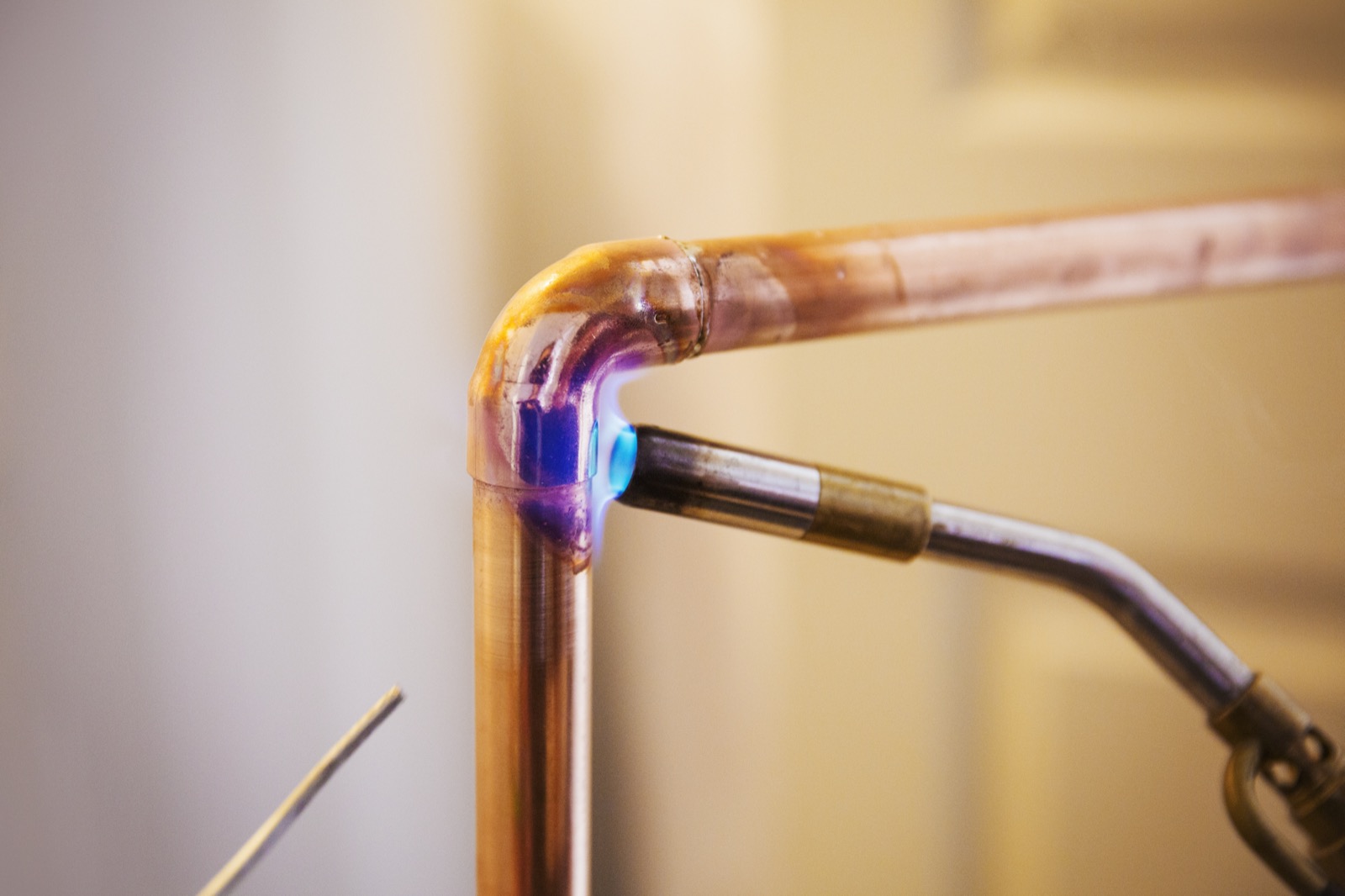
A whole-home repipe is a fundamentally different project from a pipe repair, and it's worth being clear about when a house actually needs one. Galvanized steel pipe corrodes from the inside over decades — by the time pressure has noticeably dropped throughout the house, the pipe's internal diameter has likely been narrowing for years, and no single repair fixes pipe that's failing everywhere at once. Copper pipe, especially in homes with more acidic water, can develop pinhole leaks — and when they start showing up in more than one location rather than as an isolated incident, that's usually a sign the whole system is at a similar point in its life, with more leaks coming rather than fewer. And polybutylene homes are their own category: once the gray plastic pipe starts failing in one spot, the honest recommendation is almost always to replace the whole system rather than chase failures one at a time, since the pipe throughout the house is the same age and material.
PEX and copper are both legitimate choices, and we'll lay out the real tradeoffs rather than pushing one. PEX is flexible enough to snake through wall cavities with fewer joints and fittings than rigid copper, which generally means faster installation and fewer future leak points; it resists freeze-cracking better than copper, since it can expand slightly rather than splitting; and it typically costs less installed. Copper has a longer track record, is rated for higher temperatures, isn't vulnerable to rodent damage or UV degradation the way exposed PEX can be, and some homeowners simply prefer an all-metal supply system, particularly if code or personal preference favors it for exposed runs. For most whole-home repipes we recommend PEX, but we'll tell you honestly if your specific home has a reason to lean copper.
The logistics are the part sales pitches gloss over, so here's the real picture: a repipe means opening wall and ceiling access at each fixture location to run new supply lines, which means patching (we coordinate patch-ready cleanup, though paint and texture matching is typically a separate step you arrange). Water is shut off during active work, and depending on the size of the home and how it's laid out, a whole-house repipe runs days, not hours — this is not a same-visit job. What we control is the sequencing: we plan the route room by room, work to keep at least partial water service available where possible, and stage the work so your household isn't without water overnight. Because a repipe is one of the largest investments a home's plumbing will ever need, payment options are available — ask when we quote yours. And if a repipe is part of a bigger renovation or a full property turnover, it's worth planning before drywall and flooring go in — see our pipe repair and full turnover pages for how that sequencing works.