
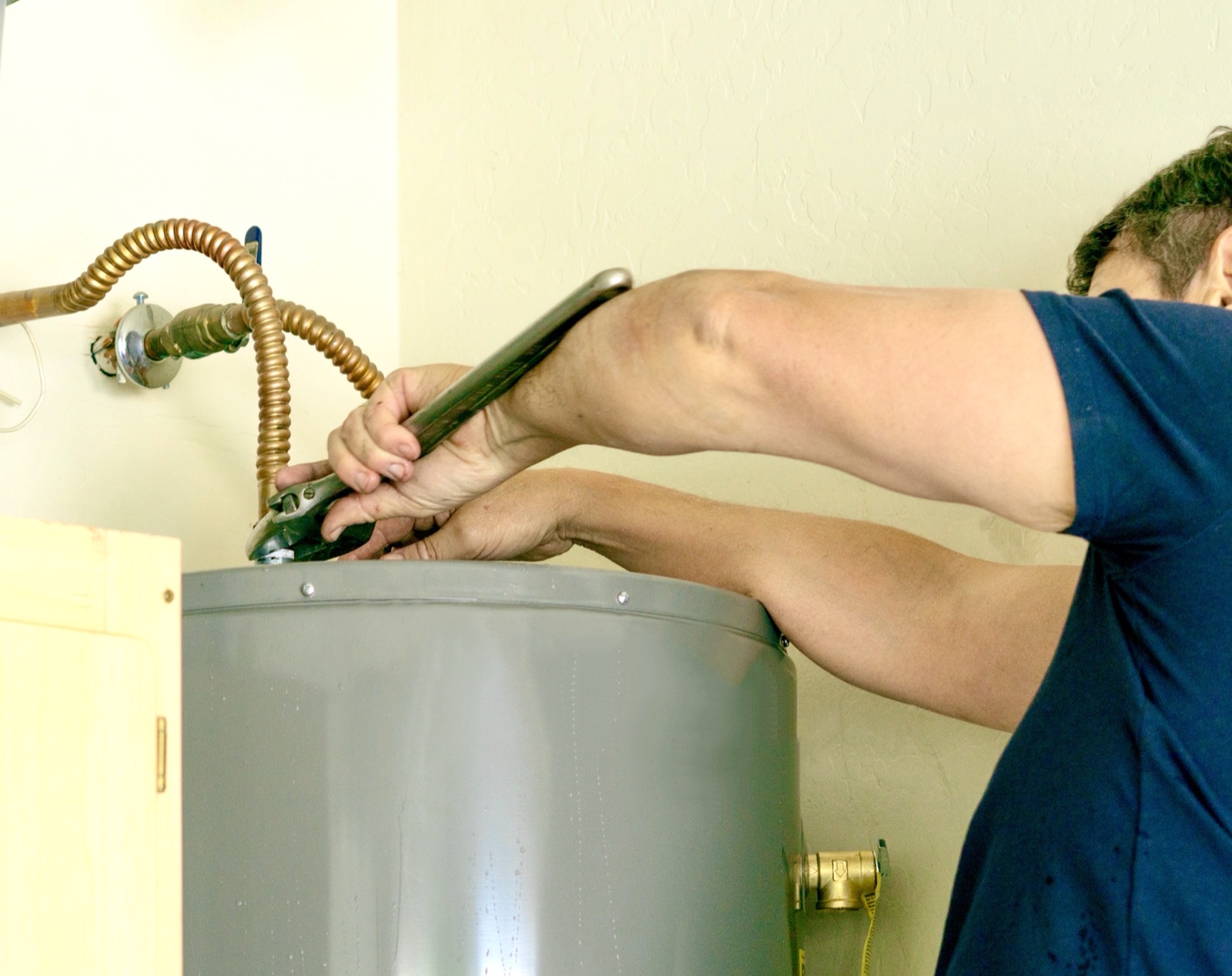
Where the water is coming from tells you most of what you need to know. A leak from the bottom of the tank itself, especially pooling directly underneath, usually means the tank has corroded through from the inside — years of mineral sediment and normal wear eventually breach the steel tank, and once that happens, the tank is at the end of its life. There's no patching a leaking tank; the only real fix is replacement.
A leak from a fitting, valve, or connection point — where a pipe threads into the tank, a drain valve at the bottom, or a supply line connection — is a very different situation and often repairable without replacing the whole unit. These are mechanical connections that can loosen, corrode, or fail on their own while the tank itself is still sound.
The temperature-and-pressure relief (T&P) valve is a safety device required on every water heater, and water discharging from its overflow pipe deserves its own read: sometimes it's the valve simply doing its job, releasing excess pressure or temperature before it becomes dangerous. But if it's discharging regularly or continuously, that's often a sign the water heater is overheating or building excess pressure — a real problem, not routine operation. Whatever the source, don't ignore a leaking water heater: shut off the water supply to the tank and the power (or gas) to the unit, and call. A leak that seems minor today can become a flooded utility closet or garage overnight, and a gas unit with a real malfunction is not something to leave running while you wait and see.