
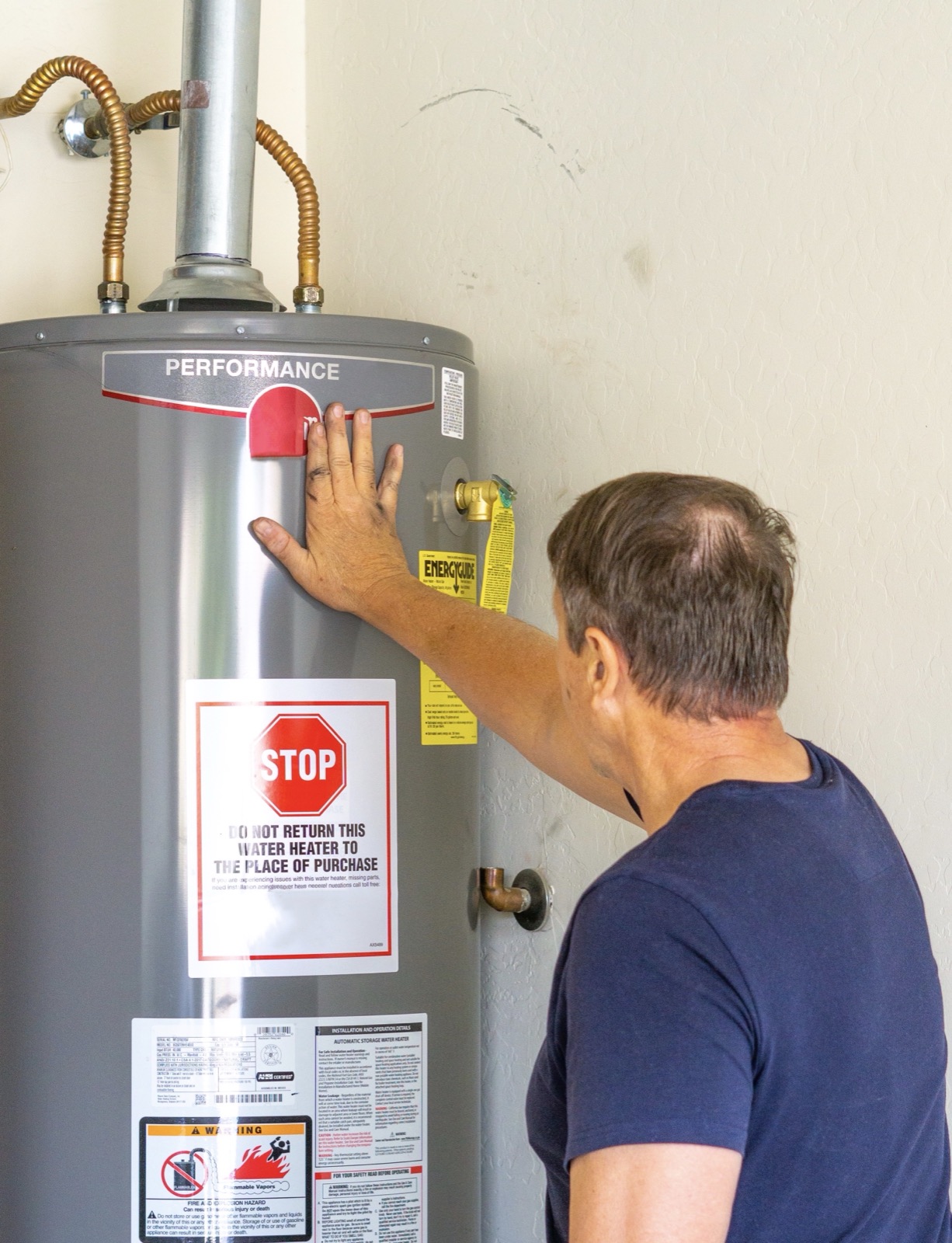
Work through the cause in order of how common it is. On a gas water heater, check the pilot light first — a small viewing window near the bottom of the tank shows whether it's lit. If it's out, the relighting steps are printed right on the tank; follow them exactly. If it won't stay lit after a try or two, stop — a pilot that keeps going out points to a failing thermocouple, not something you did wrong. On an electric water heater, check your breaker panel before anything else. A tripped breaker or a tripped high-limit reset switch on the heater itself cuts power with no other warning than suddenly cold water. Reset it once; if it trips again right away, leave it off and call, because a breaker that won't hold is doing its job protecting you from a short.
If the power and pilot both check out, the next suspects are the thermostat and the tank itself. Someone (or a houseguest) may have simply turned the thermostat dial down. After that, sediment is the most common culprit in DFW homes — mineral buildup from hard water settles at the bottom of the tank and insulates the burner or lower heating element from the water above it, so the heater runs but can't transfer heat efficiently. A tank that's undersized for your household's demand shows up differently: hot water at the start of a shower that runs out fast, especially with multiple people showering back to back, rather than no hot water at all.
Beyond those, a failed heating element (electric) or a failed thermocouple (gas) will leave the tank stone cold even with power and pilot present, and that's a parts swap for a licensed plumber, not a DIY job — it involves draining the tank and working inside a pressurized, sometimes gas-connected appliance. Resetting a breaker or relighting a pilot per the label is safe to try yourself; anything past that — a breaker that won't hold, a pilot that won't stay lit, or a tank that's simply dead — is where we come in. No hot water gets front-of-line priority for our next available dispatch.