
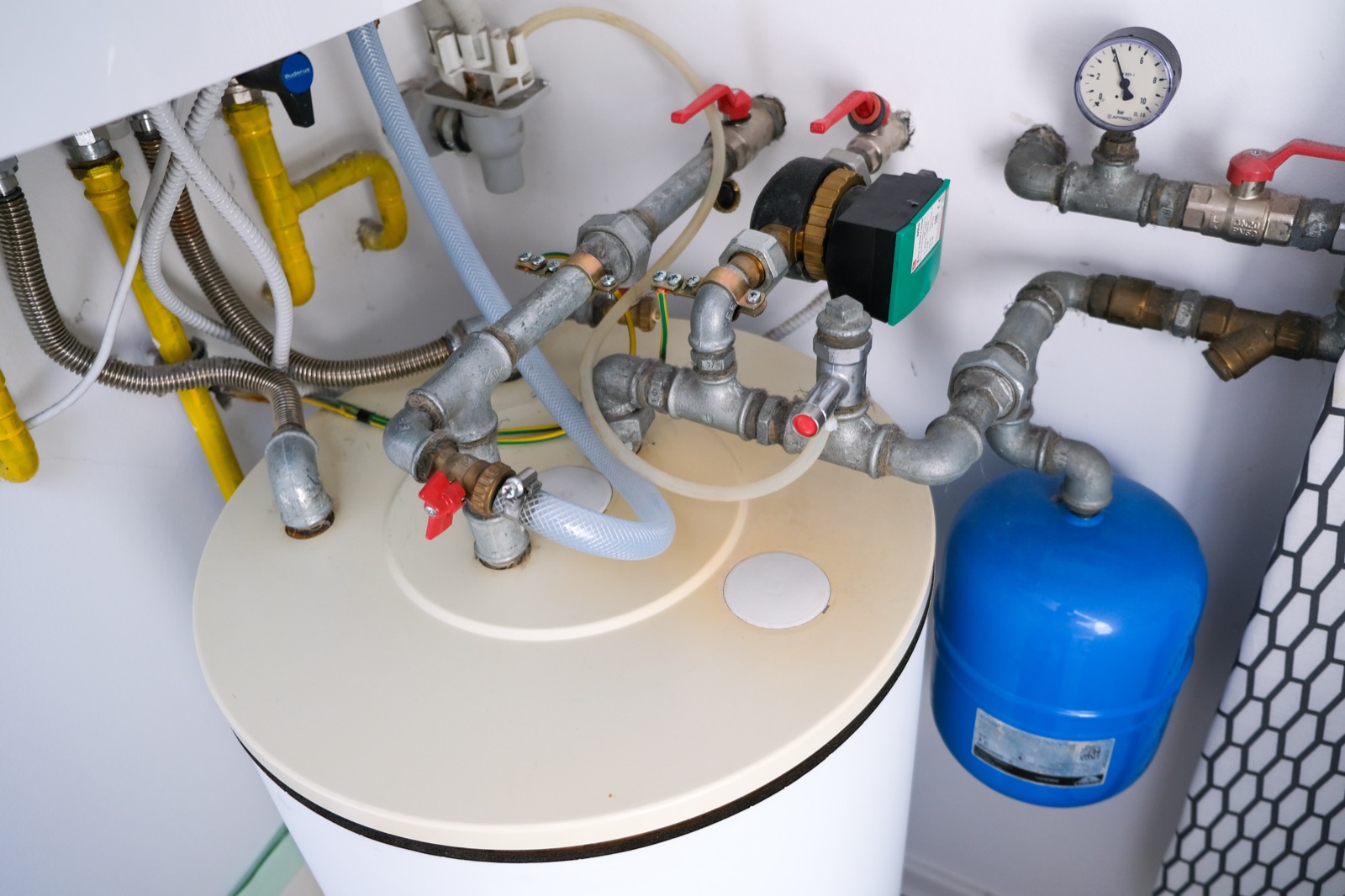
Water heater tank with pipes and a pressure gauge

Discolored Water

Water color tells you where to look. Brown, cloudy, and blue-green each point to a different cause — some in your own plumbing, some outside your control.

$150 service visit — applies to the repair

TX Master Plumber #M-39682
Licensed & Insured
1-Year Warranty
BBB A+ Accredited
Need emergency service? Call (682) 900-4100 — emergencies get front-of-line priority

Brown or rusty water is usually corrosion — either aging galvanized steel supply pipes rusting from the inside, or sediment inside your water heater's tank getting stirred up and pushed out through the hot water line. It shows up more noticeably after nearby water line work (yours or a neighbor's), after the water's been off and back on, or right after running hot water following a period the heater wasn't used. If it's isolated to hot water only, the water heater tank is the likely source; if it's in both hot and cold, it points more toward the supply piping itself.

Cloudy or milky-white water is usually the least concerning of the three: it's typically just trapped air in the line, often after any work on the plumbing system or a pressure change. The simple test is to fill a clear glass and let it sit for a minute or two — if the cloudiness clears from the bottom up, that's air, and it's harmless. If it stays cloudy or has a different texture, that points to something else worth checking.

Blue-green staining, especially around fixtures or in water that's sat in copper pipe for a while (like first thing in the morning), points to copper pipe corrosion, usually from water on the more acidic end of the range reacting with the copper over time. It's worth having your water tested if you see this consistently, since it can also mean elevated copper levels in your drinking water. One more distinction worth making: if discoloration is affecting your water only, it's likely your home's plumbing. If neighbors on your street are seeing the same thing at the same time, that points to the municipal supply rather than your pipes — it's worth calling the city first in that case, since no amount of work on your own plumbing fixes a supply-side issue.

Water heater tank with pipes and a pressure gauge

Upfront pricing — three ways to get one

Flat-rate, approved by you before any work starts. You pay for the work, not for a truck in your driveway. What you pay to find out depends on what you already know.

Know what needs replacing?
Free

Photo or phone quote

Water heater, toilet, faucet, disposal, a repipe — anything where you already know what needs replacing. Send a photo and we price it without sending a truck. Costs you nothing, obligates you to nothing.

Don't know what's wrong?
$150

Service visit

A licensed plumber diagnoses it on site. Covers the visit and the first 30 minutes of work — and it applies to the repair if you go ahead with one. It is also our minimum charge, so a small fix is often this and nothing more.

Need a specific test?
From $189

A named diagnostic

Pressure and PRV test, hydrostatic test, sewer scope, camera inspection, slab leak investigation. Each one is a fixed price with a written result you keep — real work with a real deliverable, not a sales call.

Evenings, weekends and holidays add a $149 after-hours fee, which members don't pay. The flat rate for the work itself never changes, and you approve every number before we start.

Frequently Asked Questions

How much does it cost to fix discolored water in Dallas?
It depends on the cause: a water heater flush to clear sediment is a contained job, while corroding galvanized supply pipe may mean replacing a section or planning a broader repipe with PEX or copper. Cloudy water from trapped air typically needs no repair at all. The flat rate covers diagnosis, parts and labor as quoted, and a 1-year workmanship warranty where repair work is done. Replacing a fixture? Send a photo and we'll quote it free. If the problem needs diagnosing, the $150 service visit covers that and the first 30 minutes — and it applies to the repair. You approve the flat rate before any work starts.
Is brown water safe to drink or shower in?
Occasional brief discoloration after nearby line work is usually just sediment and typically clears within a few minutes of running the tap. Persistent or recurring brown water is worth having diagnosed rather than living with — we can tell you on site whether it's your water heater or your supply piping.
Should I call the city or a plumber first?
If it's only your home and no one else nearby has the issue, it's almost certainly your plumbing — call us. If neighbors are seeing the same discoloration around the same time, that points to the municipal water supply, and the city is the right first call in that case.

Ready to Schedule Discolored Water?

Same-day service for most repairs. Upfront pricing, no surprises. Licensed, insured, and backed by a 1-year workmanship warranty.

CallTextPhoto quote