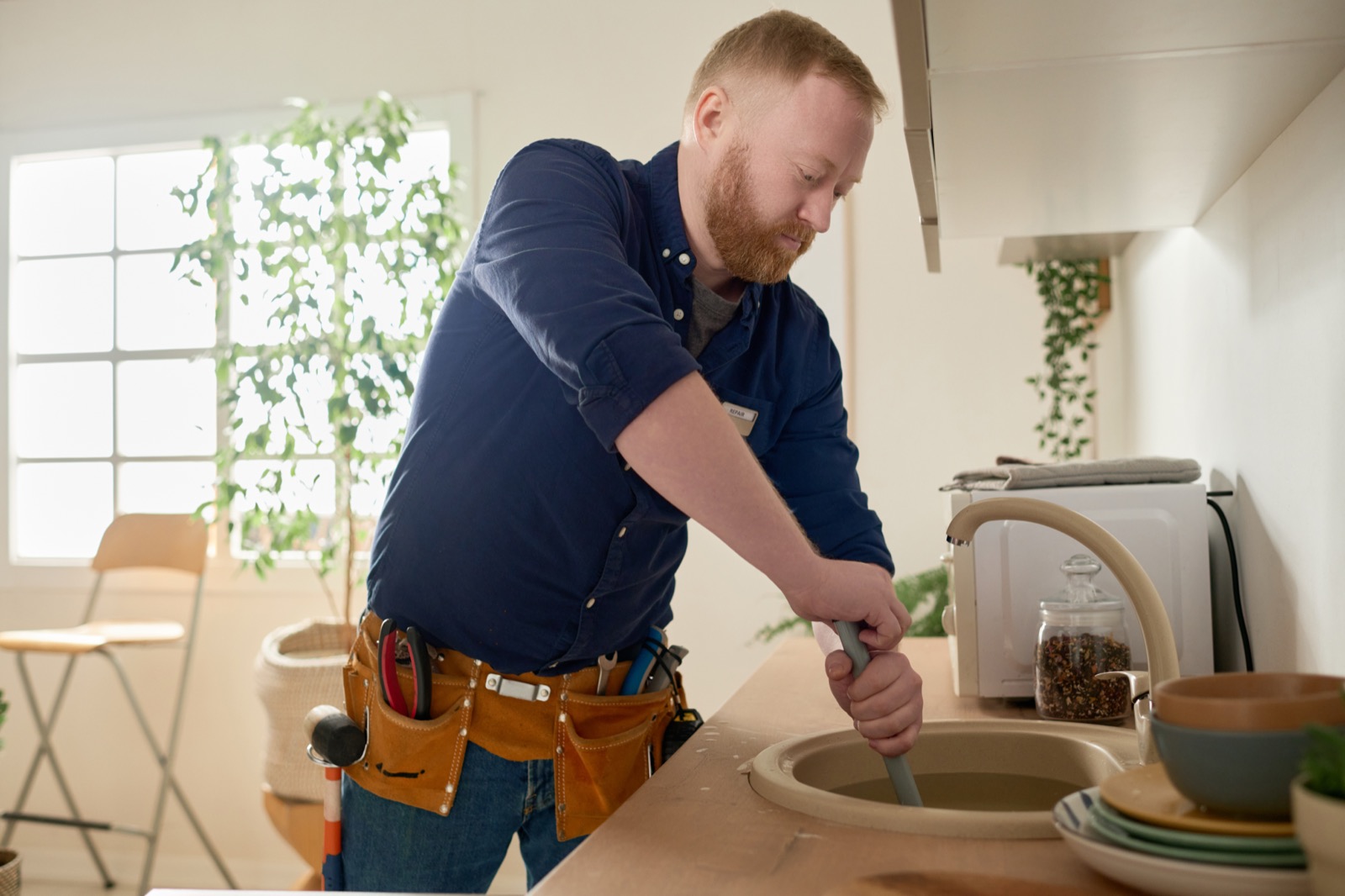
Use a flange plunger (the kind with an extra rubber flap that extends into the drain), not a flat sink plunger — it forms a much better seal in a toilet bowl. Add enough water to cover the plunger cup, position it to fully cover the drain hole with no air gaps, and push in gently first to push air out, then pump firmly several times before pulling up sharply on the last stroke. Repeat a few times before giving up; a proper seal and technique clears the large majority of simple clogs.
Know when not to force it. If plunging isn't working after several honest attempts, stop pushing harder — in older homes with cast-iron drain lines, aggressive plunging or over-tightened equipment can aggravate an already-fragile pipe. And if the same toilet clogs repeatedly over weeks or months even with normal use, that's not bad luck — it's usually a sign of a partial blockage further down the line, often tree root intrusion into the sewer line, and no amount of plunging fixes that; it needs a camera inspection to see what's actually happening in the pipe.
A closet auger (also called a toilet snake) is the next step past plunging — it's a flexible cable designed specifically to navigate the toilet's trap without scratching the porcelain, and it can clear blockages a plunger can't reach. Never use a standard drain snake meant for sinks in a toilet bowl. And as a preventive matter: toilets are designed for waste and toilet paper only — wipes (even ones labeled 'flushable'), paper towels, feminine products, and cotton products are the most common causes of clogs that plunging won't touch because they don't break down in water the way toilet paper does.