
Two Good Technologies, One Right Answer for Your House
We install both tank and tankless water heaters across DFW, and we have no horse in this race — so here's the comparison we give at kitchen tables, without the sales pitch.
How they differ in one sentence each. A tank heater keeps a reserve of hot water ready around the clock; a tankless unit fires a powerful burner only when a hot tap opens, heating water as it passes through.
Sizing: Gallons vs. Flow Rate
Tank sizing is about storage: enough gallons for your household's busiest hour. Most DFW homes run a standard residential tank, stepping up in capacity for larger families or big soaking tubs.
Tankless sizing is about flow rate — how many fixtures can run hot at the same time, measured in gallons per minute. Here's the part most sales pitches skip: a tankless unit's output depends on how much it must raise the incoming water temperature. In a DFW winter, groundwater arrives much colder than in summer, so the same unit delivers less flow in January than in July. Size for winter, not for the brochure number. An undersized tankless is the source of most "we hate our tankless" stories — two showers and a dishwasher running, and the third fixture goes lukewarm.
Endless isn't the same as unlimited. Tankless gives you endless hot water at its rated flow — not unlimited simultaneous use. A properly sized unit handles a real household; an undersized one never lets you forget it.
The Installation Realities Nobody Mentions on the Box
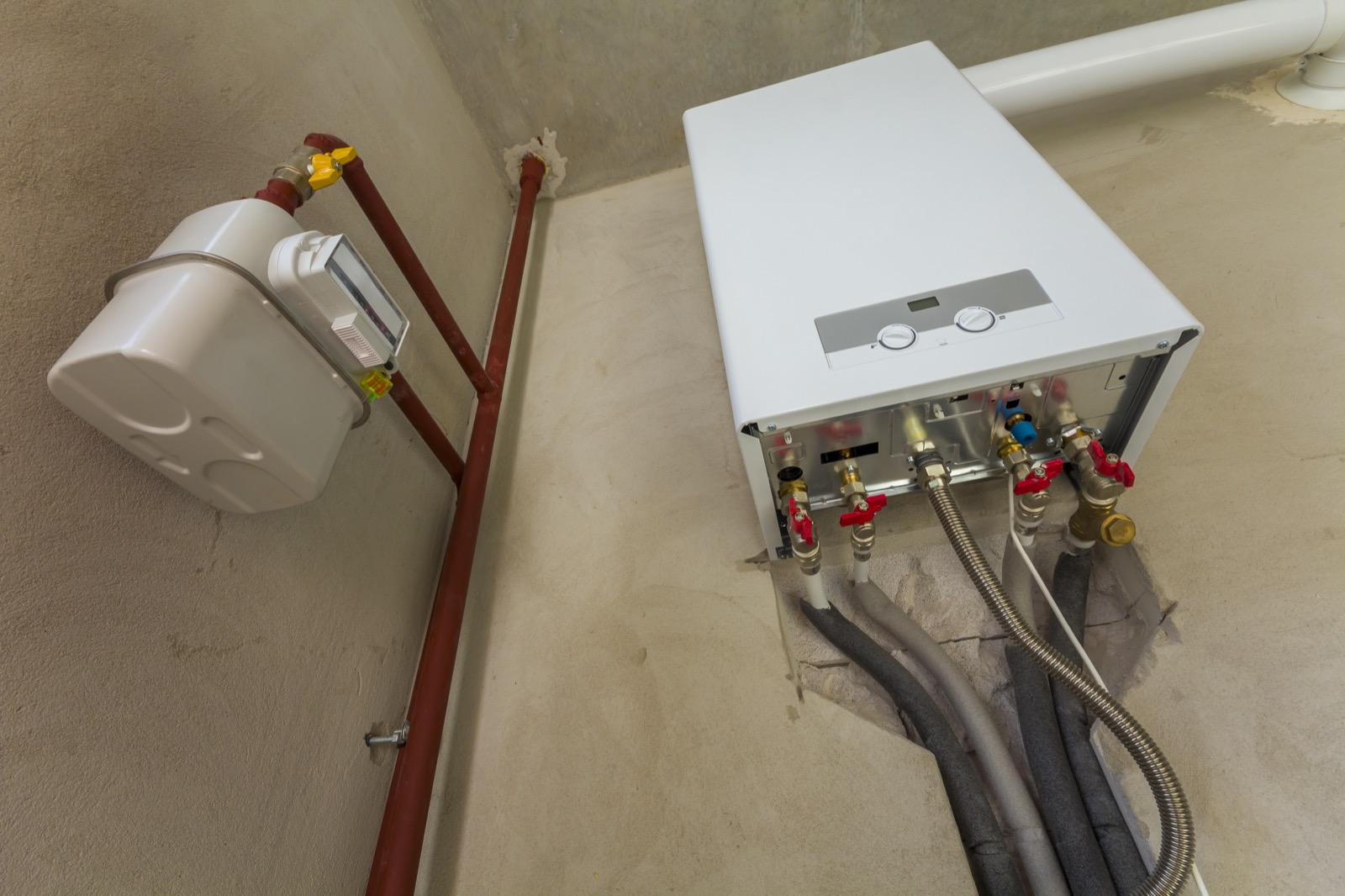
This is where tankless conversions get honest. A tankless burner is several times more powerful than a tank's burner, and many DFW homes — especially pre-2000 construction — have a gas supply line sized for the original equipment. Converting to tankless often means upsizing the gas line to feed the new unit, and that's real work, not an accessory.
Venting is the second reality. A tankless unit can't use the old metal flue; it needs its own dedicated venting run to the exterior, or a condensing model vented in PVC. Depending on where your current heater sits — closet, garage, attic — the vent path can be simple or genuinely involved. Add a condensate drain for condensing models and an electrical outlet for the control board, and you can see why a tankless conversion is priced after a site visit, never over the phone.
A like-for-like tank replacement, by contrast, usually reuses the existing gas, venting, and footprint. It's the simpler installation by a wide margin — one reason it remains the most common choice in our service area.
Hard Water Changes the Math
DFW's hard water affects both technologies, differently. In a tank, minerals settle as sediment; an annual flush manages it. In a tankless unit, scale forms inside the narrow passages of the heat exchanger, and manufacturers require periodic descaling — annually is the common recommendation in water like ours — to maintain performance and keep the warranty intact. Plan on it like an oil change: isolation valves installed at the unit make it a routine service. If you won't keep up with descaling and don't have a softener, a tank will forgive you more.
Honest Fit: Who Should Choose What
A tank water heater suits you if: you want the simplest, most budget-friendly replacement; your household's hot-water use is ordinary; the current location has no room or path for new venting; or this is a rental property where straightforward maintenance matters most.
A tankless unit suits you if: you regularly outrun a tank (big family, back-to-back showers, large tub); you're staying in the home long enough to enjoy the longer service life; you value the space savings and the end of standby heating; and you're prepared for the descaling routine. Tankless units are also repairable component-by-component in a way tanks aren't — a failed tank is a replacement, while a failed tankless part is usually a fix.
Either way, a professional install should include a thermal expansion check, proper pan and drain where required, and permits pulled with your city. Cutting corners on a water heater is how garages flood and warranties void.
Get a Real Answer for Your House
The right choice depends on your gas supply, vent path, household size, and how long you'll own the home — which is why we quote water heaters in person, not over the phone. Explore our tank water heater and tankless services, then call (682) 900-4100. Send a photo of your current heater and we will price tank and tankless free, side by side, so you can compare honestly before any work starts.