The Silent Plumbing Killer That Feels Like a Feature
Ask most homeowners about their water pressure and the only complaint you'll hear is "too low." But in our crew's experience, the far more destructive problem is the opposite one — pressure that's too high. It feels luxurious in the shower while it quietly shortens the life of every valve, hose, and appliance connection in the house.
Here's the standard to know: residential plumbing codes used across DFW require that static water pressure at the home not exceed 80 PSI, and when the city supply runs higher, a pressure reducing valve (PRV) must bring it down. The comfortable, safe working range for a home is roughly 40 to 80 PSI, and most plumbers like to see somewhere in the middle of that band. City mains in parts of the metroplex can run well above 80 — the PRV on your house line is what stands between that pressure and your fixtures.
The Gauge Test Anyone Can Do
You don't need a plumber to find out where you stand. Any hardware store sells a simple screw-on pressure gauge with a standard garden-hose fitting.
Reading between 40 and 80 PSI? You're in the healthy range. Reading above 80 PSI — or right at the top of the range at midday — deserves attention, because your overnight peak is likely higher.
Signs Your PRV Has Failed
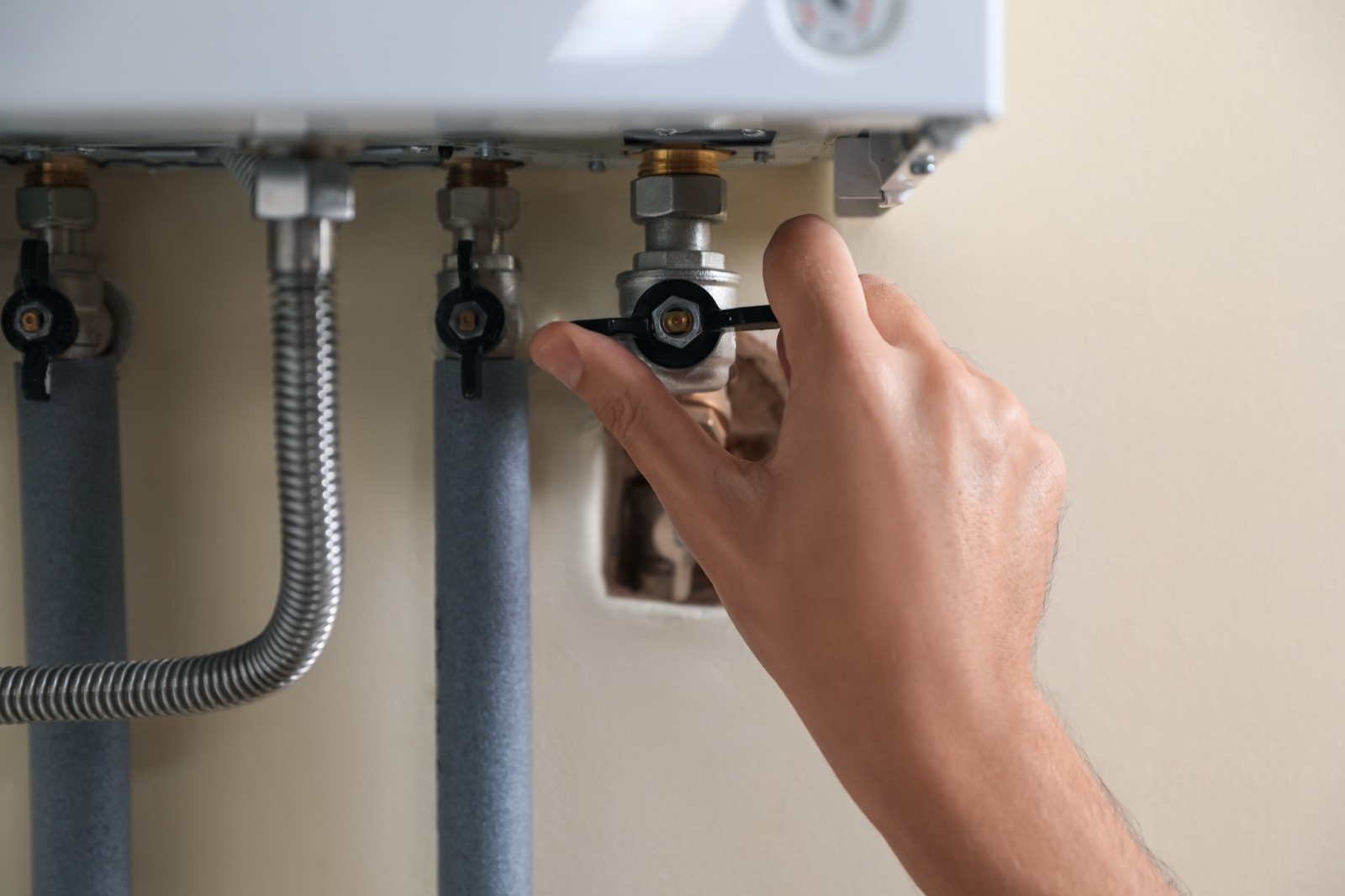
Most DFW homes with a PRV have it on the main line near the shutoff, often in a box near the foundation. PRVs are mechanical devices with springs and diaphragms, and they wear out — typically after a decade or so of service. When one fails, it usually fails open, letting full street pressure through. The symptoms:
Any one of these is worth a gauge test. Two or more, and you should assume the PRV until proven otherwise.
What High Pressure Actually Damages
Every component of your plumbing is rated with normal household pressure in mind. Run the system high and you accelerate wear on all of it at once: faucet cartridges and toilet fill valves fail early, supply hoses on washing machines strain toward rupture, water heater relief valves open, and the constant stress finds the weakest point in your piping — which, in an older home, may be a pinhole in a wall or under the slab. High pressure also simply wastes water; every drip and every flush moves more than it should. A burst supply hose while you're at work is the classic high-pressure disaster, and it's entirely preventable.
There's one more wrinkle worth knowing: when a PRV is installed, your home becomes a closed system, and heated water has nowhere to expand — which is why an expansion tank at the water heater is required alongside a PRV in most DFW cities. If your pressure swings oddly or your relief valve weeps only after hot water use, thermal expansion may be the culprit, and it travels with the PRV conversation.
Fixing It Is Straightforward
The good news: this is one of the most solvable problems in plumbing. Replacing or adding a PRV on the main water line restores the whole house to a healthy pressure in a single visit, and if hidden damage is suspected, our leak detection team can confirm the system is tight.
Test your pressure this weekend — it takes five turns of a hose bib. If the number worries you, call (682) 900-4100. Our pressure and PRV test is $189 and gives you the reading in writing, along with a flat-rate price for the fix if one is needed.