
What "Hard Water" Actually Means
Water that falls on North Texas doesn't stay soft for long. As it moves through the limestone-heavy geology that feeds area lakes and aquifers, it picks up dissolved calcium and magnesium. That mineral load is what water professionals call hardness, and most of the Dallas-Fort Worth metroplex lands squarely in the moderately hard to hard range on the standard grains-per-gallon scale.
Hard water is safe to drink — the minerals aren't a health problem. The problem is what happens when that water gets heated or evaporates: the dissolved minerals come out of solution and stick to whatever surface they're touching. Plumbers call it scale. You've seen it as the white crust on a showerhead or the cloudy film on glassware. What you can't see is the same crust forming inside your water heater, your fixtures, and your appliances, every day, for years.
Where Scale Does Its Damage
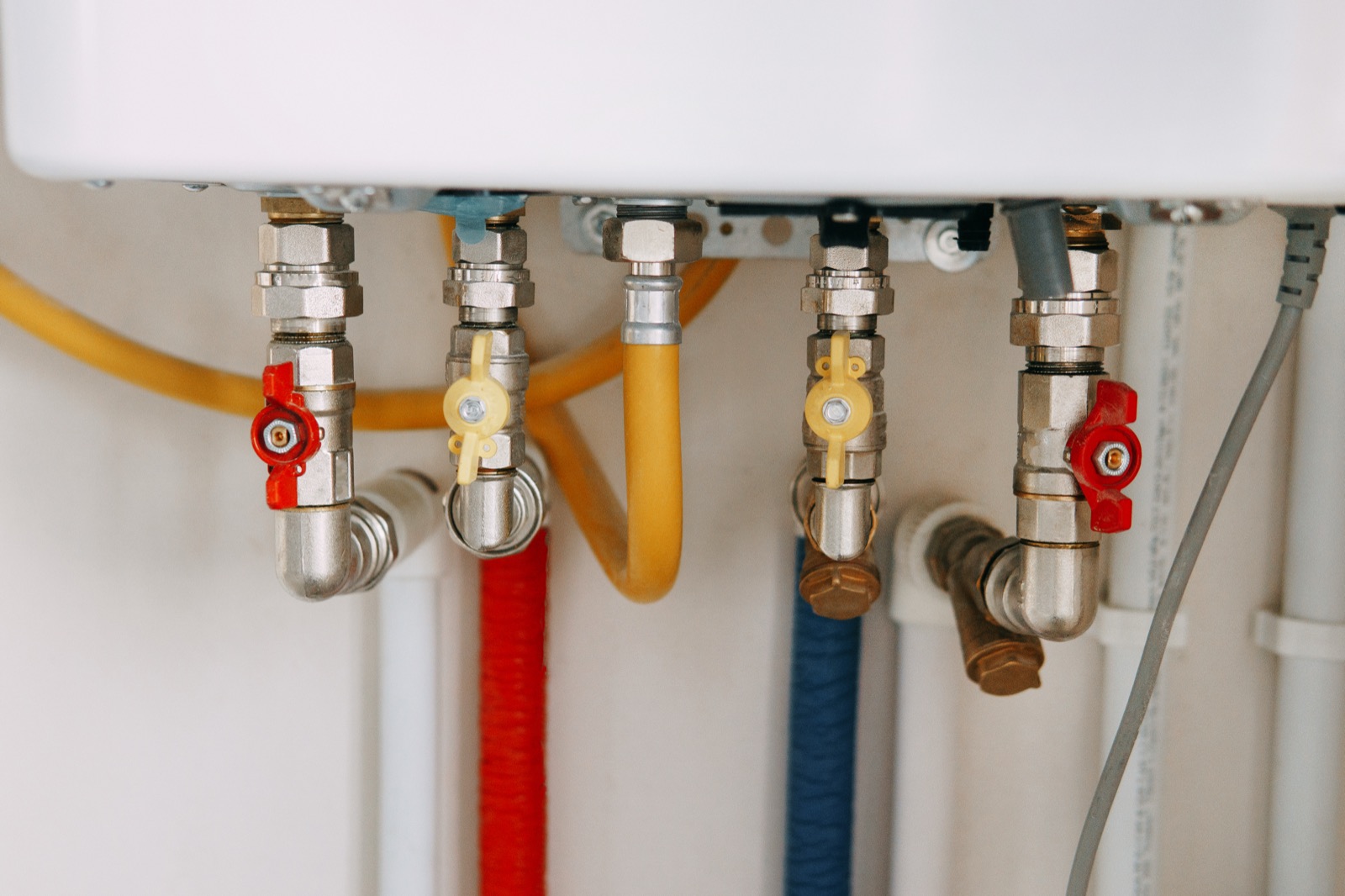
Water heaters take the worst of it. Scale settles to the bottom of a tank water heater and forms an insulating layer between the burner and the water. The burner has to run longer to heat through the sediment, which raises operating cost and stresses the tank. That popping or rumbling sound many DFW water heaters make is water flashing to steam beneath a sediment layer. Sediment is one of the most common reasons tanks in our area fail earlier than their design life. Tankless units aren't immune either — scale narrows the passages in their heat exchanger, which is why manufacturers require regular descaling in hard-water regions to keep the warranty valid.
Fixtures and aerators clog from the tip back. Weak or spraying-sideways flow at a bathroom faucet is very often a scaled-up aerator, and crusted showerheads lose spray pattern and pressure. Faucet and fixture problems in DFW are frequently mineral problems wearing a disguise.
Valves and moving parts stick. Scale builds on toilet fill valves, washing-machine inlet screens, and the cartridges inside faucets, causing drips, slow fills, and premature replacement. Even shutoff valves under sinks can seize from mineral deposits — which you discover at the worst possible moment.
Appliances age faster. Dishwashers and washing machines heat water too, so they scale internally the same way a water heater does. Spotty dishes and stiff laundry are the visible symptoms.
What Actually Helps
A water softener is the direct fix for hardness. It exchanges the calcium and magnesium ions for sodium before the water enters your home's plumbing, so scale simply stops forming downstream. Softened water protects the water heater, keeps fixtures clean, and makes soap work noticeably better. The trade-offs: a softener needs salt refills, a drain connection, and periodic maintenance, and some people don't love the slick feel of softened water. Many households run a separate unsoftened line to the kitchen tap or add a drinking-water filter for taste.
Filtration is a different tool for a different job. Carbon filtration systems improve taste, odor, and chlorine — but a standard carbon filter does not remove hardness. Reverse-osmosis systems do remove minerals, but they're point-of-use systems sized for drinking water at one tap, not for protecting the whole house. The right answer for many DFW homes is a combination: softening for the whole house, plus filtration where you drink. Our water filtration and softener team can test your water and walk you through what your specific numbers justify — sometimes the honest answer is that a softener alone is plenty.
The Maintenance That Buys You Years
Whether or not you soften, a few habits blunt the damage:
If your water heater is already rumbling, or your fixtures are crusting faster than you can clean them, it's worth having a professional look before the mineral damage turns into a replacement.
We've been working on hard-water plumbing across the metroplex since 2013 — call (682) 900-4100 and we'll take a look. If you already know what you want replaced, send a photo and the quote is free.